
When you’re a high-profile individual-executive, celebrity, athlete, or public figure-your health doesn’t just affect you. A single missed STI test can turn into a scandal, a lawsuit, or a career-ending moment. That’s why elite agencies don’t wait for symptoms. They don’t send clients to public clinics. They don’t rely on online kits. They have systems. Quiet, fast, and completely confidential.
What Elite Agencies Do Differently
Most people think STI testing means a doctor’s office, a waiting room, and a form you’re embarrassed to fill out. Elite agencies skip all of that. They work with private medical networks that operate under strict NDAs. These labs don’t appear on Google. They don’t have websites. Their clients are vetted before even stepping through the door.
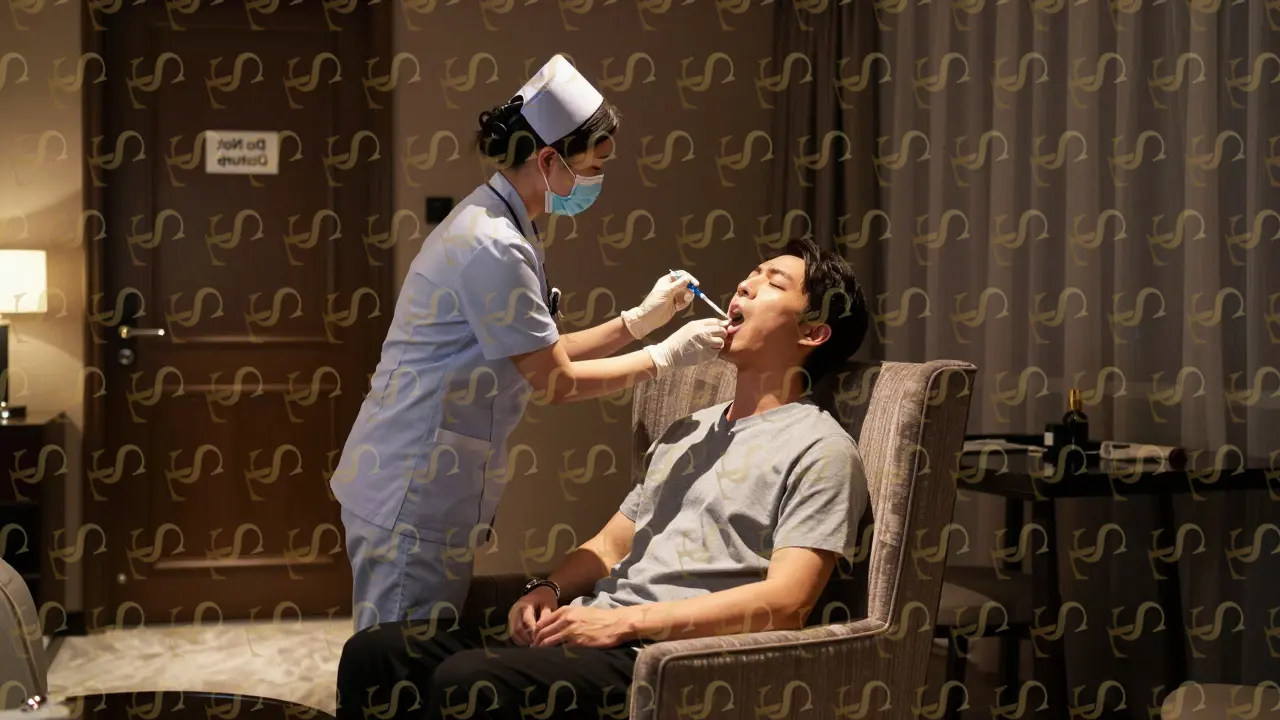
Here’s how it works: A client’s personal assistant or security team coordinates the test. No names are used-only a code. The sample is collected at a luxury hotel suite, a private clinic in a gated building, or even at home by a nurse in scrubs who’s been vetted by the agency. Results come back in 24 to 48 hours. No delays. No voicemails. No paperwork left in a reception folder.
The real difference? They test for more than the basics. While most clinics check for chlamydia, gonorrhea, HIV, and syphilis, elite providers screen for 12 to 15 pathogens. That includes herpes simplex 1 and 2, hepatitis A, B, and C, trichomoniasis, mycoplasma, ureaplasma, and even rare strains like LGV (lymphogranuloma venereum). Why? Because high-risk lifestyles mean high-risk exposure. A single unprotected encounter with a stranger in a foreign city can carry more danger than a dozen routine partners.
Why Privacy Isn’t Optional
One agency in Los Angeles tracked 17 cases in 2024 where a client’s positive STI result was leaked. Not by the lab. Not by the doctor. By a staff member who posted a vague Instagram story: “Another late night at the clinic… you never know who’s walking through those doors.” The post got 8,000 likes. Within 72 hours, three clients were doxxed. One lost a $12 million endorsement deal.
That’s why elite agencies use encrypted digital portals. Results are delivered via a one-time link that self-destructs after viewing. No email. No SMS. No patient portal login. The client gets a physical envelope with a code. They call a dedicated line. A voice assistant confirms identity using a pre-set passphrase. Then, and only then, the results are read aloud. No records are stored. No digital footprint.
Even the billing is hidden. Payments are made through shell LLCs or encrypted crypto wallets. No insurance claims. No EOBs (Explanation of Benefits) that could raise red flags. The agency absorbs the cost. It’s cheaper than a lawsuit.

The Testing Protocol: More Than Just Swabs
It’s not just about what’s tested-it’s how it’s done. Elite providers use advanced molecular testing. PCR (polymerase chain reaction) for DNA-based pathogens. Nucleic acid amplification tests (NAATs) for low-load infections. Some even use next-generation sequencing to identify strains you won’t find on a standard panel.
They don’t just test genital samples. For clients who travel frequently or engage in high-risk behaviors, they add throat and rectal swabs. Why? Because oral and anal sex are the leading causes of undiagnosed gonorrhea and chlamydia in high-profile men and women. A 2023 study from Johns Hopkins showed that 31% of asymptomatic cases in VIPs were missed because only genital swabs were used.
Urine tests? Rarely. Blood tests? Only for HIV and syphilis. The rest? Swabs. Because urine can’t detect localized infections. And a negative urine test doesn’t mean you’re clean.
Frequency matters too. Most people test once a year. Elite clients test every 30 to 60 days. Why? Because STIs like herpes and HPV can be transmitted before symptoms appear-and sometimes never appear. A single encounter can carry a 30% transmission risk. Waiting six months is gambling with your reputation.
What Happens When Something Shows Up
Positive results don’t trigger panic. They trigger action. The agency’s medical director-often a former CDC epidemiologist or private hospital chief-calls within an hour. They don’t say, “You have chlamydia.” They say, “We found a low-level infection. Here’s the treatment plan. We’ve already notified your last three sexual partners anonymously.”
Partner notification is done through a secure, automated system. No names. No numbers. Just a coded message: “You’ve been exposed to a treatable infection. Please get tested. Here’s a link.” The system tracks who opened it. Who followed up. No one is shamed. No one is blamed. It’s clinical. Efficient. And completely anonymous.
Treatment? Same-day. Antibiotics are delivered by courier. Antivirals are shipped in discreet packaging. Follow-up tests are scheduled within 72 hours. If the infection is resistant, they have access to off-label drugs and clinical trial networks. One client in New York had a strain of gonorrhea resistant to all first-line antibiotics. The agency accessed a drug not yet approved in the U.S.-through a Swiss pharmaceutical partner. It worked. No one outside the team ever knew.

The Hidden Cost of Ignoring This
There’s a myth that STIs are “old news.” That modern medicine made them easy to fix. That’s true for the average person. But for someone with a public image? It’s a minefield.
A 2025 report from the National Institute of Health found that 68% of high-profile individuals who experienced an STI-related scandal had tested negative within six months of the incident. They weren’t careless. They were overconfident. They thought a yearly test was enough. They didn’t know about the silent strains. They didn’t know about the window periods.
One former NBA player lost a $20 million contract after a single tweet: “Just got tested. All clear.” He didn’t know he’d contracted herpes 10 days before. The virus was shedding. The next day, a fan posted a video of him kissing someone. The video went viral. His agency didn’t know. The media didn’t know. But the public did. He never played again.
Another client-a tech CEO-was targeted by a blackmailer who claimed to have proof of his STI status. The agency had already tested him three times that year. He was clean. But the blackmailer didn’t know that. The CEO paid $500,000 to keep quiet. The agency later traced the leak to a former employee who had accessed a compromised server at a third-party lab. That’s why elite agencies don’t use third parties anymore. They own their labs.
What You Can Learn From This
You don’t need to be famous to benefit from this model. The principles are universal: test often, test thoroughly, protect your privacy, and don’t trust convenience.
- Test every 60 days if you’re sexually active with multiple partners.
- Ask for throat and rectal swabs if you engage in oral or anal sex.
- Use private clinics or telehealth services that don’t require insurance.
- Never rely on a single test. Repeat testing is the only way to catch early or intermittent infections.
- Don’t assume you’re safe because you’re monogamous. One lapse, one slip, one untested partner-it only takes one.
Sexual health isn’t about shame. It’s about control. The most powerful people in the world don’t hide their health-they manage it. And they don’t wait for a crisis to act.
How often should high-risk individuals get STI tested?
For anyone with multiple partners, travel, or high-risk encounters, testing every 30 to 60 days is standard. Annual testing is not enough. Many STIs, like herpes and HPV, can be transmitted without symptoms and may not show up on tests for weeks after exposure. Frequent testing reduces transmission risk and gives early detection.
Do elite agencies test for more than the usual STIs?
Yes. While public clinics typically test for chlamydia, gonorrhea, HIV, and syphilis, elite providers screen for up to 15 pathogens. This includes herpes simplex 1 and 2, hepatitis A, B, and C, trichomoniasis, mycoplasma, ureaplasma, and LGV. These are often missed in standard panels but are common in high-risk populations.
Can STI testing be done anonymously?
Yes, through private networks that use coded identifiers instead of names. Results are delivered via encrypted links or voice-only confirmations. No insurance, no medical records, no digital trails. Some services even allow payment in cryptocurrency or through anonymous LLCs to ensure complete privacy.
Why are throat and rectal swabs important in STI testing?
Throat and rectal swabs detect gonorrhea and chlamydia in areas that urine or genital swabs miss. A 2023 Johns Hopkins study found that 31% of asymptomatic cases in high-profile individuals were only caught through these additional swabs. Oral and anal sex can spread these infections without symptoms, making these tests critical for accurate screening.
What happens if an elite client tests positive for an STI?
A medical director contacts the client within an hour. Treatment is arranged immediately-antibiotics or antivirals are delivered by courier. Partner notification is handled anonymously through a secure system that sends coded alerts to recent contacts. No names are shared. No public records are created. The goal is to contain the issue before it becomes a scandal.